
Lab Grown Diamond FAQ: Growth and Identification

Q & A
Diamond, also known as adamant, is primarily composed of carbon and often contains small amounts of elements such as silicon, aluminum, calcium, magnesium, iron, nitrogen, or boron. Diamond belongs to the cubic crystal system. Each carbon atom forms strong covalent bonds with four other carbon atoms, and its crystal structure consists of carbon atoms arranged in an interlocking octahedral framework. It is extremely hard, with a Mohs hardness of up to 10, making it the hardest natural substance and earning it the title “King of Hardness.”
Pure diamond is transparent and colorless. When trace impurities are present, however, other colors may appear. For example, boron produces a blue color, while nitrogen produces a yellow color. Colorless diamonds are extremely rare in nature, and the vast majority have a slightly yellow tint. Natural diamonds crystallize deep within the Earth under extremely high temperatures (above 1500℃) and ultra-high pressures (above 50,000 atmospheres), equivalent to depths of 150–300 km below the Earth’s surface.
What about synthetic diamonds? Humans have been attempting to synthesize diamonds for hundreds of years. After countless failures, diamonds were finally synthesized in laboratories during the last century. There are currently two methods for producing gem-quality synthetic diamonds: the high-pressure, high-temperature method (HPHT) and chemical vapor deposition (CVD). Approximately 90% of industrial diamonds have now been replaced by man-made synthetic diamonds produced using the high-pressure, high-temperature method, and gem-quality synthetic diamonds are also available on the market. In recent years, diamonds have also been synthesized at low pressure using vapor deposition technology. A single diamond is claimed to be capable of reaching a weight of 100 carats, making this method highly competitive. De Beers also began manufacturing and selling synthetic diamonds in 2018, and the proportion of synthetic diamonds in the market is expected to increase year by year.
Frequently Asked Questions About Diamonds
1. What are lab-grown diamonds? What are synthetic diamonds? How do they differ from natural diamonds?
Humans have been attempting to synthesize diamonds for hundreds of years. After countless failures, diamonds were finally synthesized in laboratories during the last century. There are currently two methods for producing gem-quality synthetic diamonds: the high-pressure, high-temperature method (HPHT) and chemical vapor deposition (CVD).
“Synthetic diamonds”:
These are diamonds grown artificially in a laboratory by simulating the high-temperature and high-pressure conditions under which natural diamonds form beneath the Earth’s crust.
“Lab-grown diamonds”:
This refers to diamonds produced using artificial synthesis methods, including HPHT and CVD crystal-growth techniques. In diamond grading and identification, both are classified as “Lab. Grown Diamond.”
Synthetic diamonds vs. natural diamonds:
Not only do they have the same appearance and composition, but their physical and chemical properties are also virtually identical to those of natural diamonds. The difference lies in how they are formed: natural diamonds are mined from beneath the Earth’s surface, while lab-grown diamonds are cultivated in laboratories under conditions that simulate the natural diamond-growth environment. The difference cannot be identified with the naked eye or by conventional instruments. Without high-resolution analytical equipment, the distinctions between them and natural diamonds may simply be that lab-grown diamonds have “a higher tendency toward flawless clarity” and “a more accessible price.”
Please refer to the following diamond classification chart:

In July 2018, the decision of the U.S. Federal Trade Commission (FTC) completely rejected the arguments made by De Beers’ lobbyists and instead adopted the scientific definition of a diamond: a “crystal of carbon,” regardless of whether it originated beneath the Earth or on a super-Earth.
The FTC’s new definition is as follows: A diamond is a mineral composed primarily of “pure carbon” crystallized in the cubic system.
The U.S. Federal Trade Commission amended the definition as follows:
The word “natural” was ultimately removed from the definition of diamond. When the Commission first used this definition in 1956, the market had only one diamond product: natural stone mined from underground. Since then, technological advances have made it possible to create diamonds in laboratories. These lab-grown diamonds have essentially the same optical, physical, and chemical properties as mined diamonds. Therefore, they are all diamonds.
The distinction between these laboratory-created diamonds and mined diamonds is explained elsewhere in the guidelines. Because it is no longer accurate to define a diamond as “natural,” the final definition of diamond does not include the word “natural.”
There is no such thing as synthetic gold.
There is no such thing as synthetic platinum.
There is no such thing as synthetic carbon.
There is no such thing as a synthetic diamond.
In light of the U.S. Federal Trade Commission’s new guidance, the Diamond Producers Association may consider changing its slogan from “Real Diamonds” to “Carbon crystals are diamonds, regardless of origin.”
[Conclusion]: Lab-grown diamonds have essentially the same optical, physical, and chemical properties as mined diamonds. Therefore, they are all diamonds.
2. What are CVD diamonds? What are HPHT diamonds?
[CVD Diamonds]:
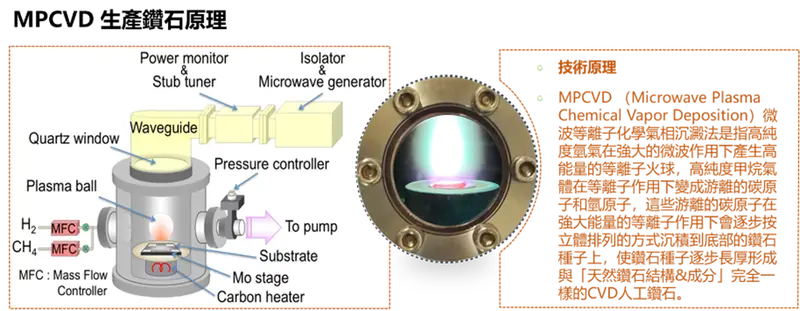
Chemical Vapor Deposition Diamond refers to diamonds grown using a microwave-assisted chemical vapor deposition process.
Methane (CH4) and hydrogen (H2) are used as feedstocks. Under vacuum and high-temperature conditions (approximately 1000–5000℃ in an ion plasma sphere), carbon crystals are grown over an extended period. These are known as CVD diamonds.
[HPHT Diamonds]:
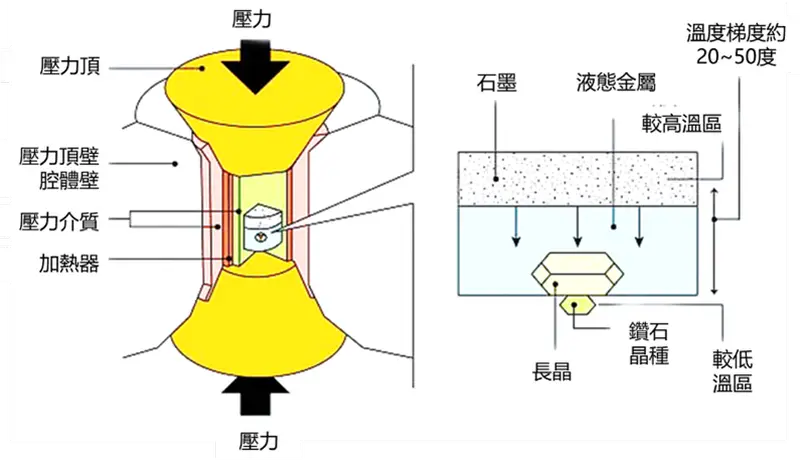
High Pressure High Temperature Diamond refers to diamonds grown using a high-pressure, high-temperature process.
Graphite is used as the raw material, together with specific catalysts such as iron, cobalt, and nickel. Under high-temperature and high-pressure conditions (approximately 50,000 atmospheres and 1200–2000℃), carbon crystals are grown over an extended period. These are known as HPHT diamonds.
| Growth Principle | CVD Diamond | HPHT Diamond |
| Growth Method | Microwave-assisted chemical vapor deposition growth (MPCVD) | High-temperature, high-pressure growth (simulating the elements involved in natural diamond formation) |
| Product | Large single crystals | Small single crystals and polycrystals |
| Hardness (MPa) | 2860 | 1500 |
| Impurities | Almost none | Metal catalysts |
| Tool Life | 2 to 5 (depending on application) | 1 |
| Performance Consistency | High (consistent) | Medium |
| Supply Consistency | High & fewer suppliers | High & many suppliers |
| Manufacturing Weight Range | Suitable for growing weights above 1ct | 0.01–1ct (large sizes are difficult to grow and costly) |
| Cost (US$/ct) | High ($1000-2000) | Low to medium ($200 –700) |
3. What are conflict diamonds? What are blood diamonds?
They are diamonds mined in war zones and sold on the market.
Countries in southern Africa, including Sierra Leone, Angola, and the Democratic Republic of the Congo, are among the sources of some of the world’s most beautiful diamonds. Unfortunately, during the 1990s, bloody conflicts arose as rival regimes competed for control. Diamond smuggling provided funds for weapons to support civil wars, resulting in years of warfare and devastating casualties, including the deaths of innocent civilians, women, and children.
The United Nations defines conflict diamonds as diamonds originating from areas controlled by armed forces or from organizations opposing a legitimate or internationally recognized government. Because the high profits and funding generated from diamond sales are invested in armed conflicts against governments or contrary to the principles of the Security Council, they are called conflict diamonds, also known as “Blood Diamonds.”
4. What are memorial diamonds?
Biological material from humans, animals, or other specially commemorative objects is sampled for its carbon-containing organic matter. Through a specialized process, the carbon in the organic material is converted into methane and other alkanes, then introduced into a crystal-growth furnace, where the carbon atoms are crystallized at high temperature and transformed into diamond.
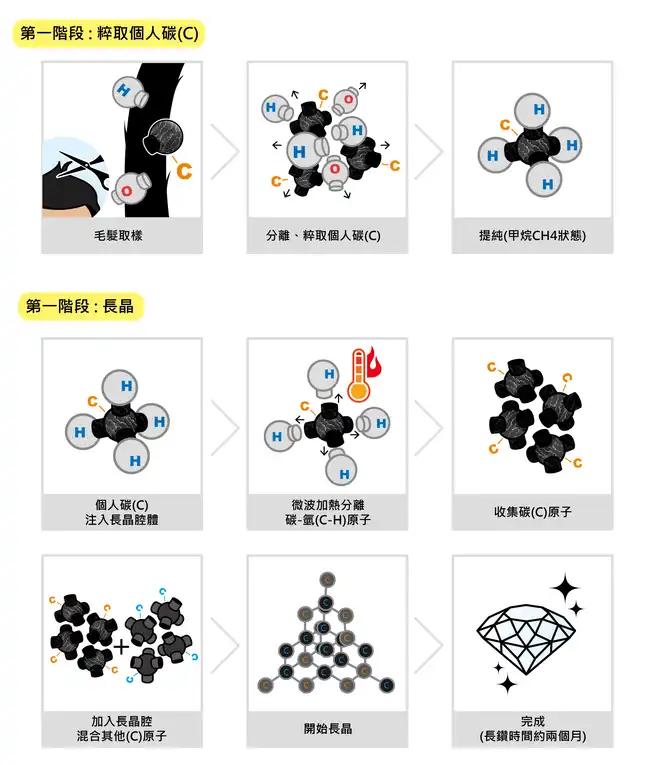
In commercial applications, carbon (C), the element used to grow diamonds, is extracted from carbon-containing organic materials such as human or pet hair and cremated remains to serve as an individual DNA signature. High technology and specialized crystal-growth techniques are then used to simulate the harsh natural diamond-forming environment. After prolonged growth at extremely high temperatures (under vacuum or ultra-high pressure), the carbon in hair and other organic materials is converted into diamond crystals. These diamonds contain an individual DNA imprint and carry unique commemorative meaning, turning a moment into eternity. Each is one of a kind worldwide, with no identical diamond elsewhere, making its value immeasurable!
We call this diamond, which carries such special meaning, an Imprint Diamond, embodying the true meaning of “A diamond lasts forever, and one diamond passes through generations.”
5. How can you distinguish a “natural diamond” from a “lab-grown diamond”?
The main differences between natural diamonds and lab-grown diamonds involve three factors: “time,” “place,” and “composition.”
- “Time” refers to the time required for diamond growth. Natural diamonds undergo crystallization deep underground over thousands or millions of years to form crystals several centimeters in size, whereas lab-grown diamonds can be produced in just a few dozen days.
- “Place” refers to where the diamond grows. Natural diamonds must form 150 to 300 km below the Earth’s surface, while lab-grown diamonds can be grown in a laboratory under suitable conditions.
- “Composition”: The main component of diamond is carbon, often with small amounts of silicon, aluminum, calcium, magnesium, iron, nitrogen, or boron. Lab-grown diamonds are also primarily composed of carbon, while other elements can be added as required. For example, nitrogen is added to produce lab-grown yellow diamonds, while boron is added to produce lab-grown blue diamonds. In general, lab-grown diamonds are cleaner than natural diamonds and contain fewer impurities.

A. Using Raman spectroscopy to distinguish “natural” from “lab-grown” diamonds
As lab-grown diamond technology has matured, competition has intensified, and prices have fallen. Distinguishing natural diamonds from lab-grown diamonds has therefore become an issue that jewelry retailers and consumers must address. Raman spectroscopy is a nondestructive analytical technique that can distinguish between natural and lab-grown diamonds.
How does Raman spectroscopy distinguish natural diamonds from lab-grown diamonds?
Generally speaking, natural diamonds exhibit an N3 fluorescence peak (Figure 1), while synthetic diamonds exhibit a Si defect peak (CVD, Figure 2) or a Ni defect peak (HPHT, Figure 3). In addition, certain fluorescence peaks unique to natural or lab-grown diamonds can also be used as a basis for distinguishing between them.
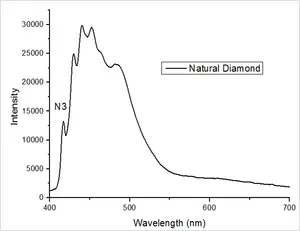
Figure 1. Raman spectrum of a natural diamond
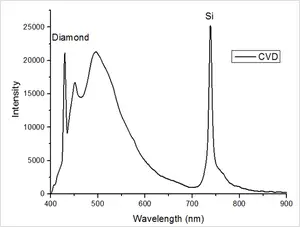
Figure 2. Raman spectrum of a CVD diamond
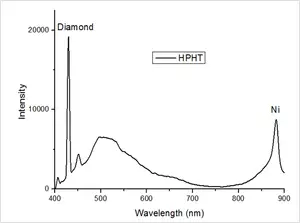
Figure 3. Raman spectrum of an HPHT diamond
B. Instruments used to test diamonds on the market
Common instruments used to test diamonds include visible-light absorption spectrometers (UV-Visible Spectrometer), Fourier-transform infrared spectrometers (FTIR), and Raman spectrometers (Raman), among others. The following is a brief introduction to these three instruments:
- Ultraviolet-visible absorption spectrometer: This method uses a continuous spectrum in the ultraviolet-visible range as the light source to illuminate the diamond and studies the relative intensity of the diamond’s light absorption. Data obtained through ultraviolet-visible absorption spectroscopy can be used to analyze which impurities (ions) are present in a diamond and further distinguish natural from lab-grown diamonds. This method is not highly sensitive for white diamonds and often requires liquid nitrogen cooling to collect a signal.
- Infrared absorption spectrometer: Different molecular vibrations produce different absorption spectra. The absorption spectrum can therefore be used to analyze which functional groups are present in a sample. In diamond analysis, an infrared absorption spectrometer can determine the nitrogen content of a diamond (Type I and Type II) and distinguish natural diamonds from CVD diamonds based on the position of hydrogen absorption peaks. When a diamond is very small, has a rough surface, or is deeply colored, a good signal is often difficult to obtain, making it impossible to determine its origin.
- Raman spectrometer: This instrument measures the inelastic scattering spectrum produced by molecular vibrations in a sample and can also detect fluorescence caused by impurity defects. Raman spectroscopy offers several advantages for distinguishing natural from lab-grown diamonds: the diamond does not need to be polished, diamond size is unrestricted, and the diamond does not need to be cooled.
C. Conclusion
As environmental awareness grows and price becomes an increasingly important consideration, the proportion of lab-grown diamonds in the diamond market will continue to rise each year. The markets for lab-grown and natural diamonds will inevitably need to be differentiated. As described above, instrument-based methods for distinguishing natural from lab-grown diamonds are now highly mature and range from basic to professional systems. For reference, visit a professional website such as www.wec-raman.com.
We hope this information will provide jewelry retailers and consumers with a basis for making informed decisions when buying and selling diamonds, while reducing consumer disputes.
>We recommend WEC instruments; link: WEC Raman Checker video
6. Do lab-grown diamonds retain their value?
When considering the overall value-retention function of diamonds, we believe that “lab-grown diamonds offer greater value retention (>) than natural diamonds.”
“Value retention” can be divided into two types: one with a monetary price, and another with no price and no substitute.
The following example illustrates why lab-grown diamonds can offer greater value retention:
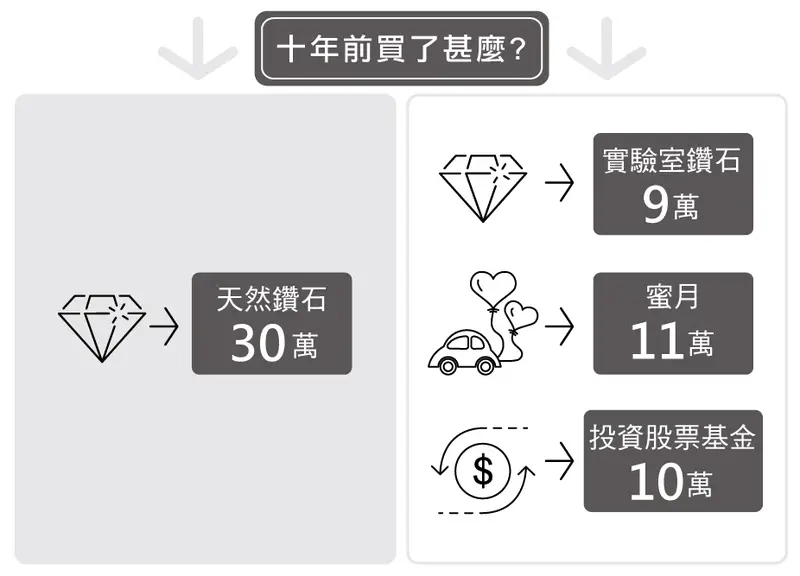
Two young couples, A and B, are preparing to get married. From their limited wedding funds, each sets aside approximately NT$300,000 to purchase diamonds as a memento.
- Couple A (NT$300,000):
They spend the entire amount on one 1 Carat (carat) natural diamond as a symbol of their marriage. - Couple B (NT$300,000):
They spend NT$90,000 on one 1 Carat (carat) lab-grown diamond as a symbol of their marriage.
The remaining NT$210,000 is used for a honeymoon (-NT$110,000) and stock-fund investments (-NT$100,000).
After 10 years, based on the concept of value retention, how much value will couples A and B have left?
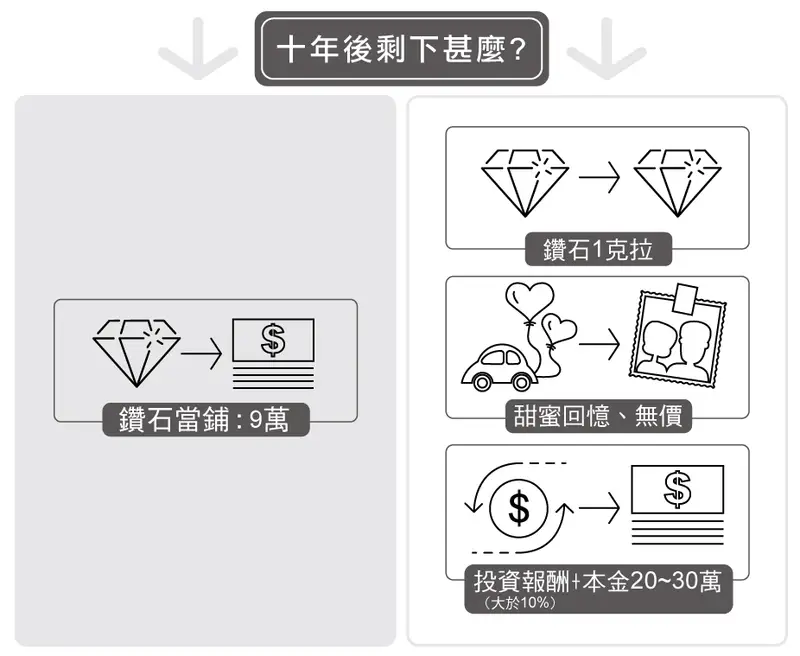

Value retention with a price table:
Lab-grown diamonds, like natural diamonds, are real diamonds and can retain their value.
However, the current production and sales structure for lab-grown diamonds does not have the deliberate planning and market promotion that have created rarity and monopolistic characteristics for natural diamonds. Therefore, lab-grown diamonds currently do not retain as much resale value as natural diamonds. At the same time, because the production and sales structure for lab-grown diamonds is still developing, they will establish their own market value once the system becomes fully developed.
Value retention without a tangible price or substitute:
Affordable pricing is fundamental to lab-grown diamonds. Personalization and customization are their defining features.
Because they are affordable, the value of happiness and joy can be achieved more easily. There is no need to spend a fortune to purchase one, unlike natural diamonds, which can feel financially out of reach.
Because they can be customized, they can create unique and personal value. This is unlike natural diamonds, which generally do not differ greatly from one another.
Lab-grown diamonds can make “my diamond priceless!” a reality.
7. Will the emergence of lab-grown diamonds affect the natural diamond market?
The answer is yes: it will definitely affect the natural diamond market.
The cost of mining natural diamonds is rising, their selling prices are increasing, and consumer acceptance is declining.
By contrast, lab-grown diamonds currently cost approximately 30–40% of the price of mined natural diamonds. As technological barriers have been overcome in recent years and commercialization has begun, market prices are expected to fall to reasonable levels.
This trend is also being accelerated by well-known manufacturers and major corporations:
- Royal Asscher, a traditional diamond cutter and retailer with five generations of history, launched the “Rebel Chique Diamonds” brand in 2013, specializing in laboratory-grown synthetic diamond creations.
- Swarovski Sawrovski had long sought to enter the diamond market and established the “DIAMA” brand in the U.S. market in 2016, launching sales of lab-grown diamonds.
- De Beers DeBeers also broke its promise not to enter the lab-grown diamond market and announced in 2018 the establishment of “LightBox,” a brand dedicated to lab-grown synthetic diamonds.
By 2050, lab-grown diamonds are estimated to account for 56%, equivalent to 55 million carats, with a current market value of approximately US$36.72 billion.
8. What are the advantages of lab-grown diamonds?
Environmentally friendly, conflict-free, and free from ethical conflicts:
There is no need to become an executioner exploiting sweatshop labor in mining regions. They have minimal environmental impact and cause no pollution.
Price advantage and excellent value:
They avoid the high costs of extensive mining and are purer than natural diamonds (Type IIa), offering better value for money.
Lab-grown diamonds sell for approximately 30–40% of the price of natural diamonds.
With the same budget, buyers can choose “higher 4C quality” and “larger sizes.”
Personalization and customization:
They meet the preferences of modern consumers and can be customized and personalized. Lab-grown diamonds can incorporate design elements to create personalized products.
They can also be imbued with personal characteristics and DNA elements, as exemplified by the creation of memorial diamonds.
High-tech applications:
Lab-grown diamonds can be manufactured as highly pure carbon-crystal diamonds, which we call “high-purity diamonds.” They can be used in:
- Next-generation semiconductors and optoelectronic components, such as high-end CPUs, quantum computers, communications equipment, sensors, diodes, and more.
- Next-generation high-end weapons, such as laser cannons, air-superiority aircraft (F-22/F-35), spacecraft, satellites, and more.
- High-efficiency thermal-management systems, scarless surgical knives, high-precision diamond tools, wear-resistant components, artificial joints, acid- and alkali-resistant valves, windows, water-resource and wastewater treatment, and more.
Most importantly, lab-grown diamonds can be mass-produced in predictable quantities and with controlled quality. This enables stable application in high-tech fields and helps create a more advanced life for humanity.